
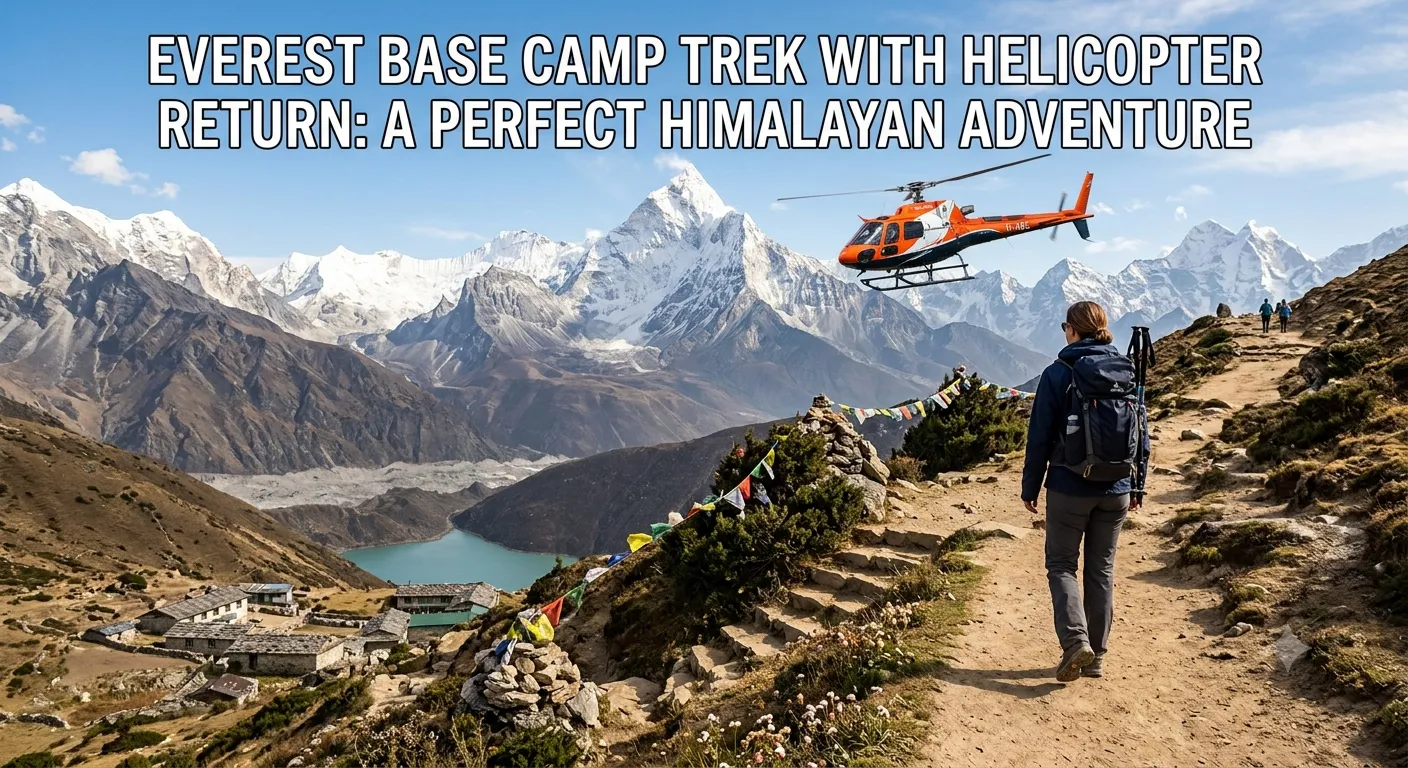
The Everest Base Camp trek with helicopter return is an exceptional way to experience the beauty, challenge, and excitement of the Himalayas while enjoying a fast and scenic journey back. This adventure combines the classic trekking route to Everest Base Camp with the comfort and convenience of a helicopter flight from the high-altitude region. It is ideal for travelers who want to walk through legendary Sherpa villages, explore dramatic mountain landscapes, and reach the base of the world’s highest peak without retracing the entire route on foot.
For many trekkers, reaching Everest Base Camp is a lifelong dream. However, the traditional return journey can add several days of walking along the same trail. A helicopter return changes the experience by saving time and offering spectacular aerial views of the Everest region.
What Is the Everest Base Camp Trek with Helicopter Return?
The Everest Base Camp trek with helicopter return follows the famous trekking trail through the Khumbu region. The journey usually begins with a flight to Lukla, followed by a gradual trek through villages such as Phakding, Namche Bazaar, Tengboche, Dingboche, Lobuche, and Gorak Shep.
Trekkers eventually reach Everest Base Camp at approximately 5,364 meters above sea level. Many itineraries also include an early morning hike to Kala Patthar, one of the best viewpoints for close-up views of Mount Everest and surrounding Himalayan peaks.
Instead of trekking all the way back to Lukla, travelers board a helicopter for the return journey. Depending on the itinerary and weather conditions, the helicopter flight may depart from Gorak Shep or another suitable location in the region.
Why Choose a Helicopter Return?
One of the main advantages of the Everest Base Camp trek with helicopter return is time efficiency. A standard round-trip trek often requires around two weeks, while a helicopter-assisted itinerary can reduce the total duration. This makes the journey attractive to travelers with limited vacation time.
Another important benefit is avoiding the repeated descent along the same route. The trek to Base Camp already provides a complete experience of the villages, monasteries, forests, suspension bridges, and mountain valleys. Returning by helicopter allows trekkers to finish the adventure in a different and memorable way.
The flight itself is a major highlight. From above, passengers can admire glaciers, deep valleys, rugged ridges, traditional settlements, and some of the highest mountains on Earth.
A Journey Through the Heart of the Khumbu
The trekking portion of the adventure is rich in natural beauty and cultural experiences. After arriving in Lukla, the trail follows the Dudh Koshi River and passes through peaceful villages and forested landscapes.
Namche Bazaar is one of the most important stops on the route. Known as the commercial center of the Khumbu region, it offers bakeries, lodges, shops, and impressive mountain views. Most itineraries include an acclimatization day here to help the body adjust to increasing altitude.
The trail then continues toward Tengboche, famous for its monastery and magnificent surroundings. Views of Everest, Ama Dablam, Lhotse, and other peaks make this section particularly rewarding. As trekkers move higher, forests gradually give way to open alpine terrain and dramatic glacial landscapes.
Reaching Everest Base Camp
Standing at Everest Base Camp is the emotional highlight of the journey. The route near the final destination crosses rugged terrain shaped by ice, rock, and powerful natural forces. The massive Khumbu Glacier dominates the landscape and creates an extraordinary high-altitude atmosphere.
Although the summit of Everest is not clearly visible from Base Camp itself, the location has enormous historical and mountaineering significance. During climbing seasons, trekkers may see expedition activity and colorful tents spread across parts of the area.
For panoramic views of Everest, many trekkers climb Kala Patthar. This viewpoint offers a remarkable perspective of Everest, Nuptse, Pumori, and the surrounding Himalayan range, especially during clear morning conditions.
The Scenic Helicopter Flight Back
The helicopter return adds a luxurious and exciting conclusion to the trek. After days of walking through demanding mountain terrain, boarding a helicopter provides a strong contrast. Within a relatively short time, travelers can leave the high Himalayas behind and descend toward lower elevations.
The aerial perspective reveals the scale of the landscape in a way that is impossible to experience from the trail. Glacial valleys, winding rivers, mountain settlements, and enormous peaks appear below the aircraft. Weather, visibility, passenger weight, and operational conditions can influence the exact flight plan.
Best Time for the Trek
The most popular seasons for the Everest Base Camp trek with helicopter return are spring and autumn. Spring generally covers March to May, while autumn usually extends from September to November.
During these periods, trekkers often experience more stable weather, clearer mountain views, and favorable trail conditions. Spring is known for colorful rhododendron forests at lower elevations, while autumn is valued for crisp visibility and pleasant trekking conditions.
Winter trekking is possible for experienced and well-prepared travelers, but temperatures can become extremely cold. The summer monsoon season often brings clouds, rainfall, and greater potential for flight disruptions.
Physical Fitness and Acclimatization
A helicopter return does not remove the physical demands of reaching Base Camp. Trekkers still need to walk for several hours each day and gradually ascend to elevations above 5,000 meters. Good cardiovascular fitness, leg strength, and mental preparation are important.
Proper acclimatization is equally essential. A responsible itinerary should include rest or adjustment days, particularly in places such as Namche Bazaar and Dingboche. Walking slowly, staying hydrated, eating adequately, and paying attention to symptoms of altitude illness are important throughout the journey.
Luxury Everest Trekking Adventure: Explore the Himalayas in Comfort and Style
A luxury Everest trekking adventure offers an exceptional way to experience the magnificent Himalayas without giving up comfort, quality service, and personalized care. The Everest region is famous for its dramatic mountain scenery, legendary trekking routes, Sherpa culture, and breathtaking views of the world’s highest peaks. While traditional trekking often involves basic accommodation and simple facilities, a luxury journey adds premium lodges, carefully planned itineraries, professional guides, quality meals, and convenient travel options.
This style of trekking is ideal for travelers who want to explore the natural beauty of Nepal while enjoying a higher level of comfort. From the exciting flight to Lukla to peaceful evenings in well-appointed mountain lodges, every stage of the journey can be designed to create a memorable Himalayan experience.
What Makes a Luxury Everest Trek Special?
A luxury trek is not simply about expensive accommodation. It is about improving the overall quality of the journey. A well-organized luxury Everest trekking adventure focuses on comfort, safety, flexibility, and personal attention.
Travelers may stay in some of the best available lodges along the route, where facilities can include comfortable beds, warm dining areas, private rooms, hot showers, charging options, and better meal selections. The exact standard varies by location because facilities become more limited at higher elevations, but the goal is to provide the best practical comfort available in the mountains.
Professional guides also play an important role. An experienced trekking guide manages daily logistics, monitors altitude-related concerns, explains local culture, and helps maintain a suitable walking pace. Porters can carry heavier luggage, allowing trekkers to enjoy the trail with a lighter daypack.
A Scenic Journey Through the Everest Region
The adventure usually begins with a thrilling journey toward Lukla, one of the best-known gateways to the Everest region. From there, the trail passes through beautiful valleys, suspension bridges, pine forests, traditional villages, and rivers fed by Himalayan glaciers.
One of the major highlights is Namche Bazaar, a lively mountain settlement surrounded by impressive peaks. Namche is an important acclimatization point and offers cafés, shops, bakeries, and comfortable lodges. Spending extra time here helps the body adjust to increasing elevation while allowing travelers to explore the local surroundings.
As the trek continues, the scenery becomes increasingly dramatic. Trekkers may enjoy views of Everest, Lhotse, Nuptse, Ama Dablam, Thamserku, and other spectacular Himalayan mountains. Every day brings a different landscape, from green lower valleys to rugged alpine terrain.
Cultural Experiences Along the Trail
A luxury Everest trekking adventure is also a cultural journey. The Khumbu region is closely connected with Sherpa traditions and Tibetan Buddhist heritage. Along the route, trekkers encounter monasteries, prayer wheels, mani stones, colorful prayer flags, and traditional settlements.
Tengboche Monastery is one of the most significant cultural landmarks in the region. Surrounded by magnificent mountain scenery, it provides visitors with an opportunity to appreciate the spiritual character of the Himalayas.
Respectful interaction with local communities adds depth to the trekking experience. A knowledgeable guide can explain customs, religious practices, village life, and the history of Himalayan mountaineering. These cultural encounters often become some of the most meaningful memories of the journey.
Premium Accommodation and Better Dining
Comfortable accommodation is one of the main advantages of luxury trekking. In lower sections of the route, travelers can often find high-quality lodges offering improved rooms, attractive dining spaces, and attentive hospitality. Some properties may provide private bathrooms and additional amenities, depending on the destination and availability.
Food is another important part of the experience. Trekkers need sufficient energy for long walking days, so meals should be nutritious and satisfying. Menus commonly include Nepali dishes, soups, rice, noodles, pasta, vegetables, eggs, bread, and other international options. In premium lodges, food presentation and variety may be better than in standard trekking accommodation.
However, travelers should maintain realistic expectations. The Everest region is remote, and transporting supplies becomes increasingly difficult at higher elevations. Luxury in the Himalayas is therefore best understood as enhanced comfort and service within a challenging mountain environment.
Flexible Itineraries and Proper Acclimatization
One of the greatest benefits of a premium trekking experience is a carefully designed itinerary. Rushing at high altitude can increase discomfort and reduce enjoyment. A responsible luxury Everest trekking adventure includes appropriate acclimatization days and manageable walking distances.
Popular routes may lead toward Everest Base Camp, while shorter itineraries can focus on panoramic viewpoints, cultural villages, or destinations such as Tengboche. Some travelers also choose helicopter-assisted options for part of the return journey, reducing the number of trekking days while adding a scenic aerial experience.
Flexibility can be especially valuable when weather, trail conditions, or individual fitness levels require adjustments. Private or small-group arrangements often make it easier to adapt the schedule.
Best Time for a Luxury Everest Trek
Spring and autumn are generally considered the most popular trekking seasons. Spring, particularly from March to May, often brings pleasant conditions, colorful vegetation at lower elevations, and excellent mountain scenery. Autumn, especially from late September through November, is known for clear skies and impressive visibility.
Winter trekking is possible for experienced and well-prepared travelers, but temperatures can be extremely cold. The summer monsoon period brings more cloud, rain, and possible flight disruptions. The best season depends on personal preferences, route choice, comfort expectations, and tolerance for cold or changing weather.
Who Should Choose This Trekking Style?
A luxury Everest trekking adventure is suitable for couples, families with appropriate trekking experience, private groups, older active travelers, photographers, and anyone who values additional comfort. It can also appeal to first-time Himalayan trekkers who want strong logistical support and a professionally managed itinerary.
Good physical preparation is still essential. Luxury services do not remove the challenges of altitude, steep trails, cold temperatures, or long walking days. Regular cardiovascular exercise, hill walking, strength training, and proper preparation can significantly improve the experience.
Final Thoughts
A luxury Everest trekking adventure combines Himalayan exploration with enhanced comfort, professional support, and thoughtful planning. It allows travelers to walk through one of the world’s most spectacular mountain regions while enjoying quality accommodation, personalized service, cultural experiences, and flexible logistics.
From the vibrant atmosphere of Namche Bazaar to peaceful monasteries and unforgettable views of towering Himalayan peaks, the journey offers far more than a simple trek. It is an opportunity to experience the beauty, culture, and grandeur of the Everest region in a refined and carefully organized way. For travelers seeking adventure without sacrificing every comfort, luxury trekking provides an inspiring balance between challenge and relaxation.