
hat Is the Everest Base Camp Helicopter Trek?
Every year, thousands of travelers dream of standing beneath the world’s highest mountain. The classic Everest Base Camp (EBC) trek takes roughly 12 to 14 days on foot, climbing to 5,364 meters (17,598 ft) through Sherpa villages, suspension bridges, and high alpine terrain. Not everyone has the time, fitness, or appetite for that journey.
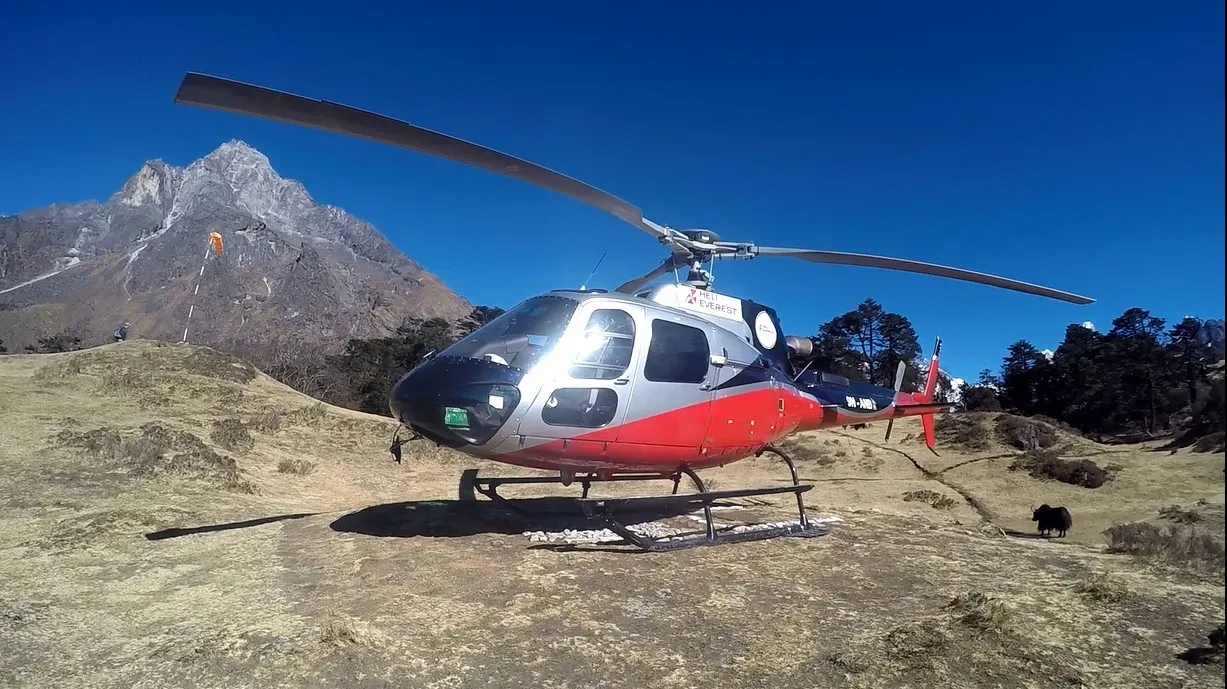
The Everest Base Camp helicopter trek answers that need. It covers a spectrum of options, from a same-day helicopter flight over the Khumbu region to a hybrid itinerary where you trek part of the route and fly the rest. Either way, you get close-range views of Everest, Lhotse, Nuptse, and Ama Dablam, the Khumbu Glacier, and the Sherpa heartland.
This guide explains how these trips work, what they cost, when to go, and how to decide whether one is right for you.
Helicopter Tour vs. Helicopter Trek: Understanding the Difference
The terms are often used interchangeably, but the experiences differ.
Everest helicopter tour (day trip). You fly from Kathmandu or Lukla, land at a high-altitude point near Everest, and return the same day. The whole trip usually takes three to four hours. It is the fastest way to see the Himalaya up close.
Everest Base Camp trek with helicopter return. You trek up to Base Camp over about a week, then fly back to Lukla or Kathmandu by helicopter. This saves two to four days of descent and is popular with travelers on tight schedules or those who want a safety net if weather or fatigue sets in.
Fly-in, trek-out (or the reverse). Some itineraries start with a helicopter flight to a higher village and finish on foot, which helps with flight delays at Lukla’s famously weather-sensitive airstrip.
One important note: helicopters generally cannot land at Everest Base Camp itself. Landing there is restricted, particularly during the spring climbing season. Flights typically land at nearby points such as Kala Patthar, Gorak Shep, or Syangboche, and pilots then fly close to Base Camp so you can view it from the air. Rules can change, so always confirm current regulations with your operator.
Sample Itinerary: Kathmandu to Everest Base Camp by Helicopter
A typical one-day helicopter tour runs like this:
-
Early morning departure from Kathmandu. Flights leave early because clear skies are most reliable before midday clouds build.
-
Flight over the Himalayan foothills. You cross terraced hills and river valleys before the snow peaks appear.
-
Landing in the Khumbu region. Depending on conditions, you land at a high viewpoint such as Kala Patthar or Gorak Shep for a short stop to take in the panorama and photograph Everest.
-
Breakfast with a view. Many operators include breakfast at a high-altitude lodge, often at Syangboche, near the Everest View Hotel.
-
Return to Kathmandu. The return flight takes a similar route, often with a slightly different view of Sagarmatha National Park.
A hybrid helicopter trek might span 7 to 9 days, with guided trekking through Namche Bazaar, Tengboche, and Dingboche, followed by a helicopter flight from Gorak Shep or Pheriche straight back to Kathmandu.
What You Will See
The appeal of this trip is the scenery, and the helicopter perspective is hard to match:
-
Mount Everest (8,849 m): Visible as a dark pyramid behind the Nuptse-Lhotse wall.
-
Lhotse, Nuptse, and Ama Dablam: Among the most photogenic peaks in the world.
-
Khumbu Glacier and Icefall: The route climbers use at the start of their summit bids.
-
Namche Bazaar: The Sherpa trading hub, built into a horseshoe-shaped hillside.
-
Tengboche Monastery: The spiritual heart of the Khumbu region.
-
Gokyo Lakes: Turquoise glacial lakes, included on some extended flight routes.
Cost of the Everest Base Camp Helicopter Trek
Prices vary by operator, season, group size, and route, so treat the figures below as rough guides and request a current written quote before booking.
-
Shared helicopter tour (group seats): Commonly in the range of USD 1,000 to 1,500 per person.
-
Private charter: A full helicopter charter for a small group can cost several thousand dollars, which can work out well for families or groups of four to five.
-
Trek with helicopter return: Typically priced as a package, often from around USD 1,500 to 3,000 or more, depending on inclusions such as guides, lodging, meals, and permits.
What is usually included: Kathmandu pickup and transfers, the helicopter flight, some meals, and a guide. What is often extra: Travel insurance, personal expenses, park and municipal permits (for trekking itineraries), and tips.
Travel insurance deserves a special mention. Make sure your policy explicitly covers helicopter evacuation and high-altitude activity up to at least 5,500 meters. Many standard policies exclude it.
Best Time to Go
Timing has a large effect on visibility and comfort.
-
Spring (March to May): Stable weather, warmer temperatures, and blooming rhododendrons at lower altitudes. This is also the main climbing season, so you may see expedition activity.
-
Autumn (late September to November): Often considered the best window, with crisp skies and excellent mountain visibility after the monsoon clears the dust.
-
Winter (December to February): Cold but often clear. Flights run, though high-altitude landings can be colder and windier.
-
Monsoon (June to August): Heavy cloud and rain reduce visibility and increase flight cancellations. It is generally the least recommended period for this trip.
Because we are now at the end of September, the autumn season is just beginning, which is a good time to start planning for clear-sky flights in October and November.
Altitude and Health: A Point Worth Taking Seriously
A helicopter ascends far faster than your body can acclimatize. Landing at 5,000 meters or more within an hour of leaving Kathmandu (about 1,400 m) raises the risk of acute mountain sickness (AMS), which can cause headaches, nausea, dizziness, and fatigue.
Practical safety advice:
-
Limit your time at altitude. Short stops reduce risk, and reputable operators keep landings brief.
-
Stay hydrated and avoid alcohol the day before and during the flight.
-
Speak to a doctor beforehand, especially if you have heart, lung, or blood-pressure conditions, or are pregnant.
-
Tell your guide immediately if you feel unwell. Descent is the most effective treatment.
-
Consider a hybrid itinerary if you want more time at altitude, since trekking up gradually builds acclimatization.
Is a Helicopter Trek Right for You?
It is a strong fit if you:
-
Have limited vacation time
-
Have mobility limitations or concerns about a long trek
-
Want to see Everest as a bucket-list experience
-
Are traveling with family members of mixed fitness levels
-
Want a flexible backup plan in case of injury, illness, or flight disruption
You may prefer the full trek if you:
-
Value the journey, culture, and village life as much as the destination
-
Want the achievement of reaching Base Camp on foot
-
Are on a tighter budget, since the walking route is usually cheaper
-
Want more time to acclimatize naturally
Many travelers find that a hybrid approach gives the best balance, trekking for the experience and flying back for time and comfort.
How to Choose a Reliable Operator
The safety record and professionalism of your operator matter more than the price tag. Before booking:
-
Confirm the operator is licensed and works with reputable, registered helicopter companies in Nepal.
-
Ask about pilots’ high-altitude experience and the maintenance standards of the aircraft.
-
Read recent, independent reviews, not only testimonials on the operator’s own site.
-
Get a clear written itinerary, inclusions list, cancellation policy, and weather-delay terms.
-
Check insurance and evacuation arrangements in advance.
Be cautious of unusually low quotes or vague promises about landing directly at Base Camp, since these can signal an operator who is cutting corners or misrepresenting what is permitted.
Practical Tips for a Smooth Trip
-
Pack layers. Even on a short flight, temperatures at the landing point can be well below freezing.
-
Bring sunglasses and sunscreen. UV exposure at altitude is intense.
-
Charge your camera and phone, and bring spare batteries since cold drains them quickly.
-
Carry your passport, as some checks may apply for flights and transfers.
-
Stay flexible. Weather in the Himalaya changes quickly, and a delayed or rescheduled flight is part of the experience. Building a spare day into your Kathmandu stay is wise.
Conclusion
The Everest Base Camp helicopter trek opens up one of the world’s most extraordinary landscapes to travelers who might otherwise never see it. Whether you choose a same-day flight, a private charter, or a hybrid trek with a helicopter return, the experience delivers sweeping views of the highest peaks on Earth, the Khumbu Glacier, and the Sherpa culture beneath them.
The key to a great trip is realistic expectations and careful preparation. Understand that landing rules may prevent you from touching down at Base Camp itself, respect the risks of rapid altitude gain, choose a reputable operator, and travel in the clear-sky seasons of autumn or spring. Do that, and you will come home with memories, and photographs, that few other journeys can match.
If you are ready to start planning, request quotes from two or three licensed operators, compare what each includes, and check that your insurance covers high-altitude helicopter flights. Everest has stood for millions of years, and with the right preparation, your view of it can be unforgettable.